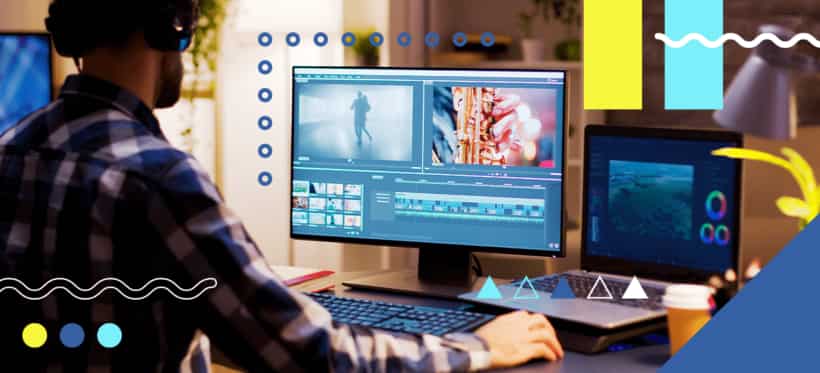
Artificial intelligence has fundamentally transformed video editing from a time-intensive manual process into an automated, efficient workflow that democratizes professional-quality content creation. Across YouTube, Twitch, and other streaming platforms, AI-powered tools are becoming essential infrastructure for creators, with adoption now reaching 87% among content creators, with over 40% using AI daily.
Dramatic Time Savings and Production Efficiency
The most immediate impact of AI video editing is time reduction. Traditional manual editing that consumed 4-5 hours of work per week can now be completed in minutes. Spikes Studio’s AI-powered automation cuts editing time by approximately 90%, while platforms like Short AI enable creators to process long-form videos into viral-ready clips automatically. For streamers specifically, tools like Eklipse.gg and Saved.gg automatically detect the best moments from Twitch, Kick, or YouTube broadcasts and transform them into ready-to-share clips without any manual editing—a process that previously required hours of footage scrubbing.
The scale of this efficiency gain matters considerably. Streamers using highlight detection bots like Saved.gg report saving 4-5 hours weekly while simultaneously generating clips with higher viral potential. This efficiency multiplier means creators can maintain consistent upload schedules across multiple platforms while dedicating more time to strategy and audience engagement rather than repetitive editing tasks.
Intelligent Highlight Detection and Smart Clipping
AI systems now automatically identify the most engaging moments from long-form content using sophisticated multi-layered signal detection. These algorithms analyze video and audio cues simultaneously—detecting cheering moments in gaming streams, key points in educational content, emotional reactions, and even chat engagement patterns. Platforms like Mootion and Short AI scan entire VODs and present creators with a timeline of suggested clips based on detected excitement peaks and audience interaction.
The technology goes beyond simple moment detection. Smart scene detection algorithms like CutMagic automatically identify and mark scene transitions, camera angle changes, and shot boundaries, allowing editors to focus on creative decisions rather than tedious timeline work. For multicam setups—common in podcasts and interviews—AI automatically switches between camera angles, a task that historically demanded significant manual coordination.
Precision rates for this technology are impressive. RecCloud’s AI highlight detection operates at 92% accuracy, while automated caption generation achieves 97-99% accuracy depending on the tool and audio quality.
Accessibility Features and Creative Enhancement
AI is removing technical barriers that traditionally required professional equipment or expertise. Background removal without green screen represents one of the most transformative capabilities—creators can now shoot anywhere and have AI intelligently separate subjects from backgrounds in seconds, eliminating the need for expensive studio setups. This democratization is particularly valuable for smaller streamers and faceless YouTube channels that previously required significant investment in equipment.
Auto-captioning and subtitle generation has evolved from novelty to essential accessibility feature. Tools integrate with YouTube, provide real-time translation in 30+ languages, and automatically generate subtitles with high accuracy. This serves dual purposes: making content accessible to deaf and hard-of-hearing audiences while simultaneously improving SEO rankings, since search engines can now index every word accurately.
AI eye contact correction tools like BIGVU analyze viewer gaze and subtly adjust it to appear camera-focused, increasing perceived professionalism and audience connection—without requiring retakes. Similarly, frame-by-frame color correction using AI (now available in tools like Imagen for Video) automatically handles color grading across varying lighting conditions, ensuring visual consistency across sequences that previously required hours of manual colorist work.
Automated Content Production Workflows
For creators running high-volume channels, AI enables what would be impossible through manual methods. AI adoption rates show 65% of creators rely on AI for at least half their posts, with businesses using generative AI reporting 90% reduction in production time. The entire workflow—from script generation through final video export—can now be automated.
Faceless YouTube channels demonstrate the extreme of this capability. Creators generate scripts using ChatGPT or Claude, synthesize voiceovers with natural-sounding AI voices like ElevenLabs, gather visuals through stock footage libraries, and assemble complete videos using platforms like Invideo AI or Katalist in 1-2 hours. Tools like Opus Clip automatically identify highlight moments and transform long-form podcasts or webinars into short-form clips optimized for YouTube Shorts, TikTok, and Instagram Reels—a process that previously required separate editing sessions for each platform.
Market Adoption and Industry Transformation
The adoption curve validates AI’s impact. 30% of digital video ads used generative AI in 2024, with projections reaching 39% by 2026. Notably, smaller brands lead adoption at 45% of small-spender brands expected to deploy AI-built creatives by 2026, compared to 36% of large advertisers—reflecting how AI democratizes access to professional capabilities.
Professional creators aren’t simply using one tool; they’re building integrated stacks. A typical modern workflow chains together topic research tools (like TubeBuddy or OutlierKit), script generators (ChatGPT Plus), voiceover synthesis (ElevenLabs), video assembly (CapCut or Runway), and thumbnail design (Canva). The result is content production velocity that would be impossible for solo creators using traditional methods.
Emerging Capabilities and Future Evolution
The technology landscape continues advancing. Real-time background removal during live recording is moving from experimental to practical, allowing streamers to swap backgrounds instantly without post-production delays. Context-aware background suggestions—where AI analyzes content and recommends appropriate virtual backgrounds—are emerging. Multi-modal AI systems combining vision, audio, and temporal analysis are improving at detecting nuanced moments, making highlight detection increasingly sophisticated.
Text-to-video generation is projected to revolutionize short-form creation, potentially dominating 95% of platform inventory once fully automated workflows normalize. This suggests the evolution from “AI-assisted editing” to “AI-driven content ideation, creation, and optimization” is already underway.
Practical Implications for Creators
For YouTubers and streamers, AI video editing translates to measurable advantages. Creator-led content enhanced with AI achieves engagement rates up to six times higher than traditional brand messaging. The ability to repurpose single long-form streams into multiple platform-optimized clips compounds reach—a single 3-hour Twitch stream becomes dozens of TikToks, YouTube Shorts, and Instagram Reels without manual intervention.
The democratization effect matters equally. Tools that were historically accessible only to production teams with dedicated editors are now available to individual creators at $9-$25 monthly pricing, or free with advanced features. This leveling of the creative playing field means skill and consistency in storytelling now matter more than access to expensive software or large production budgets.
However, the underlying trend is clear: AI handles the technical and repetitive aspects of editing—cutting, captioning, color correction, background removal—while creators increasingly focus on what humans do better: strategy, voice development, audience connection, and creative decision-making.